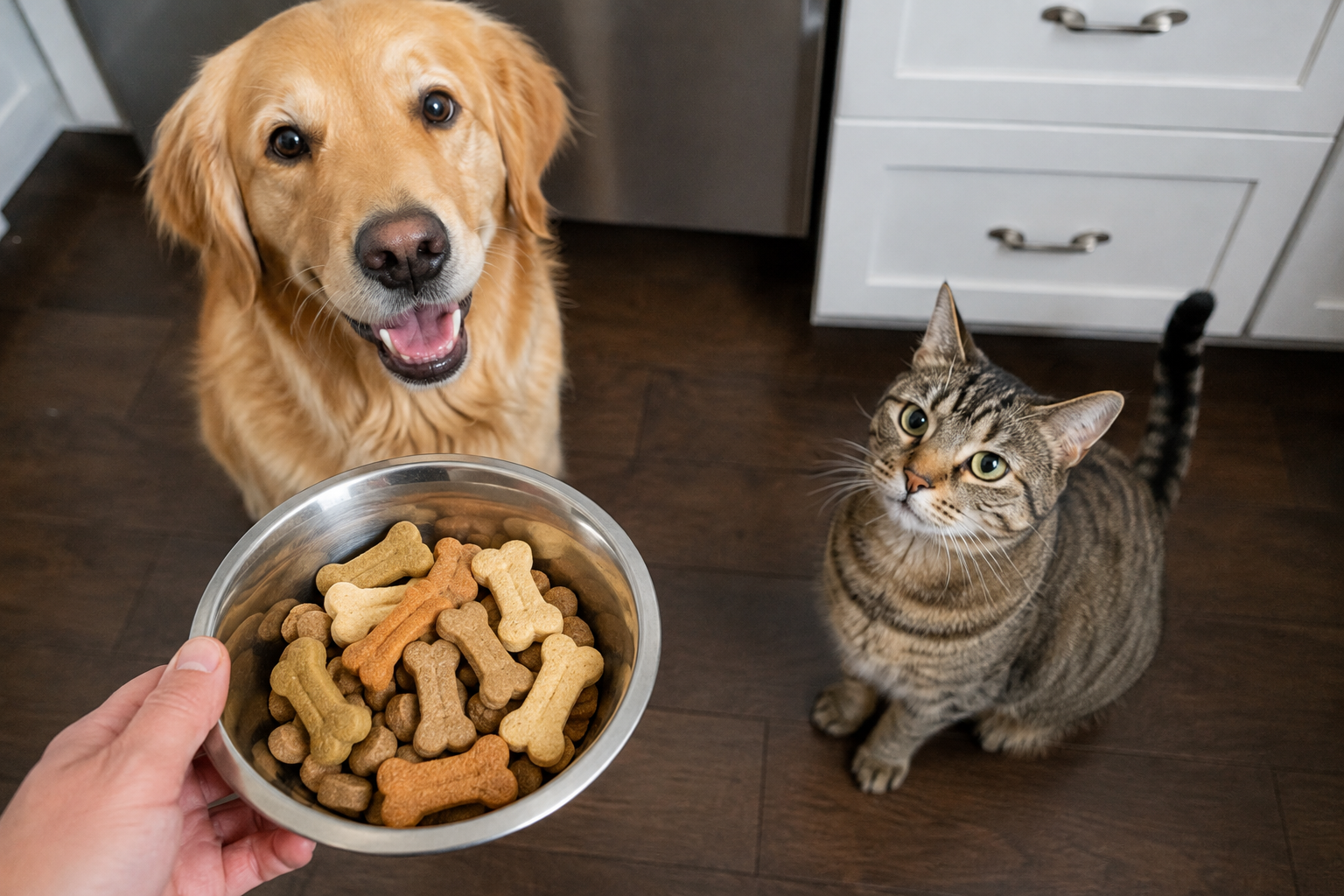
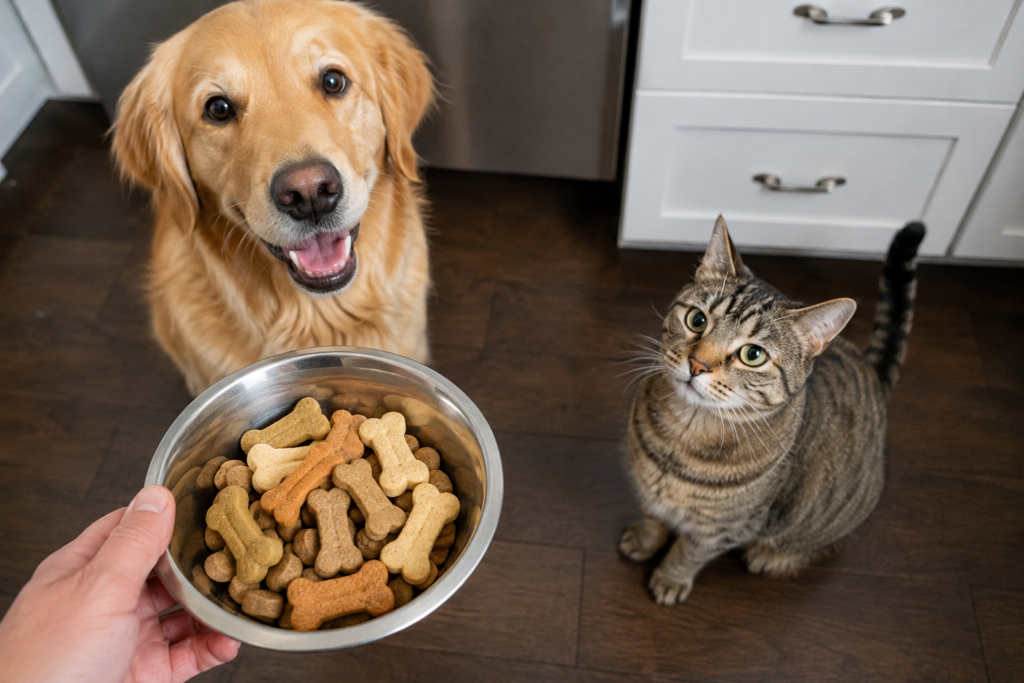
Healthy treats can be a great way to show love to your pet while also supporting good nutrition. Dogs and cats often get excited when they hear the sound of a treat bag, but not every treat available in stores is a healthy choice. Some treats contain too much sugar, salt, fat, or unnecessary ingredients that may not be good for your pet when given regularly.
Choosing healthy treats for dogs and cats does not have to be difficult. With a little knowledge, you can find simple and nutritious options that your pet will enjoy. Whether you have a playful puppy, an older dog, a curious kitten, or an adult cat, the right treats can become part of a balanced pet care routine.
Why Healthy Treats Matter for Pets
Treats are more than just a reward. They can be useful for training, bonding, encouraging good behavior, and making your pet feel special. However, treats should not replace a complete and balanced diet.
Too many treats can lead to excess calories and weight gain. Obesity is a common problem in pets and can affect their overall quality of life. Extra weight may put more pressure on the joints and can make everyday activities harder.
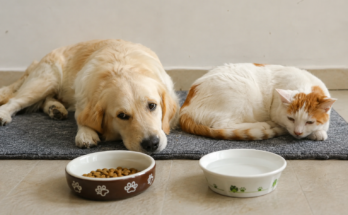
Healthy pet treats can help you reward your dog or cat without adding unnecessary ingredients to their daily diet. The best treats are usually simple, appropriate for the animal, and given in reasonable portions.
Healthy Treats for Dogs
Dogs can enjoy a variety of healthy foods as occasional treats. Fresh fruits and vegetables can be good choices for many dogs when prepared properly.
Carrots
Carrots are one of the easiest healthy treats for dogs. They are crunchy, low in calories, and provide fiber. Many dogs enjoy raw carrot pieces, while others may prefer lightly cooked carrots.
Always cut larger carrots into suitable pieces to make them easier for your dog to chew. Small pieces are especially important for puppies and small breeds.
Apples
Apples can be a tasty treat for dogs. They contain fiber and several nutrients. Before giving apple to your dog, remove the seeds and core because these parts are not suitable for pets.
Cut the apple into small pieces and give it as an occasional snack. Avoid adding sugar, syrup, or other sweet ingredients.
Blueberries
Blueberries are small, easy to serve, and naturally sweet. They can make a good occasional treat for dogs. You can offer a few fresh blueberries directly or mix a small amount into your dog’s regular food.
Because every dog is different, start with a small portion and watch how your pet responds.
Pumpkin
Plain pumpkin can be a useful treat for dogs. It provides fiber and can be included in a pet’s diet in small amounts. Make sure you use plain cooked pumpkin or plain canned pumpkin without added sugar, spices, or other ingredients.
Pumpkin can also be mixed with regular dog food for a simple change of taste.
Cooked Chicken
Plain cooked chicken can be a high protein treat for dogs. It should be cooked without onions, garlic, heavy spices, sauces, or excessive oil.
Remove all bones before serving. Cooked bones can become dangerous because they may break into sharp pieces.
Healthy Treats for Cats
Cats have different nutritional needs from dogs. Cats are obligate carnivores, which means animal based protein is especially important in their diet. Because of this, many healthy treats for cats are protein based.
Plain Cooked Chicken
Small pieces of plain cooked chicken can be an excellent occasional treat for cats. Chicken provides protein and is usually appealing to cats.
The meat should be fully cooked and free from seasoning. Avoid giving chicken that has been cooked with onion, garlic, spicy sauces, or large amounts of salt.
Cooked Turkey
Plain cooked turkey can also be offered to cats in small amounts. Choose lean meat and remove the skin and bones.
Keep the serving small because treats should only make up a limited part of your cat’s overall daily food intake.
Cooked Fish
Some cats love fish, and plain cooked fish can be an occasional treat. Make sure the fish is fully cooked and free from bones.
Avoid heavily salted, smoked, fried, or seasoned fish. These preparations may contain ingredients that are not appropriate for cats.
Small Amounts of Pumpkin
Some cats can enjoy a small amount of plain pumpkin. It provides fiber and can be mixed with regular food.
Only offer plain pumpkin without added sugar, spices, or other ingredients. If your cat has digestive problems, talk with a veterinarian before making dietary changes.
Commercial Cat Treats
There are many commercial cat treats available, but reading the ingredient label is important. Look for products with simple ingredients and a suitable calorie amount.
Protein based treats are often a better option for cats than treats that contain large amounts of fillers or unnecessary sweeteners.
Treats That Dogs and Cats Should Avoid
Knowing what not to give your pet is just as important as knowing which healthy treats to choose.
Chocolate should never be given to dogs or cats because it contains substances that can be toxic to pets. Grapes and raisins can also be dangerous, particularly for dogs.
Onions and garlic should be avoided because they can cause serious health problems. Foods containing excessive salt, sugar, or artificial ingredients are also poor choices.
You should also avoid giving pets alcohol, caffeinated drinks, and foods containing xylitol. Xylitol is a sweetener that can be extremely dangerous for dogs.
Bones can also be risky, especially cooked bones that may splinter. If you are unsure whether a particular food is safe for your pet, it is better to check with a veterinarian before offering it.
How Many Treats Should You Give Your Pet?
Even healthy treats should be given in moderation. A common guideline is that treats and other extras should make up no more than about ten percent of a pet’s daily calorie intake.
The exact amount depends on your pet’s size, age, activity level, health, and regular diet. A small dog or cat may need only a few small treats, while a larger active dog may be able to have slightly more.
It is easy to give too many treats without realizing it. If you use treats during training, consider breaking larger treats into smaller pieces. Your pet can still enjoy the reward without receiving too many calories.
Healthy Treats for Pet Training
Treats can be very useful during dog training. Small pieces of healthy food can encourage good behavior and help your dog learn commands.
Choose treats that are small and easy to chew. Training sessions may involve many rewards, so smaller portions can help control calorie intake.
Cats can also respond well to food rewards. If your cat enjoys a particular healthy treat, you can use small amounts when teaching simple behaviors or encouraging positive habits.
Remember that praise, play, petting, and attention can also be rewards. Your pet does not always need food to feel appreciated.
Homemade Healthy Pet Treats
Making homemade treats can give you more control over the ingredients. For dogs, simple recipes using ingredients such as oats, pumpkin, carrots, and plain cooked meat can be prepared in small portions.
For cats, homemade treats can focus more on animal based protein. Small pieces of plain cooked chicken or turkey can work well.
When preparing homemade pet treats, avoid ingredients such as chocolate, onions, garlic, excessive salt, sugar, and artificial sweeteners. Keep recipes simple and make portions appropriate for your pet.
Homemade does not automatically mean healthy. The ingredients and portion size still matter.
Choosing Store Bought Healthy Pet Treats
If you prefer buying treats, take a few minutes to read the label. Look at the ingredient list and calorie information when available.
For dogs, treats with recognizable ingredients and reasonable calorie content can be a good choice. For cats, look for treats that provide animal based protein and avoid unnecessary additives.
It is also helpful to choose treats that match your pet’s age and size. Puppies, kittens, senior pets, and animals with special dietary needs may require different options.
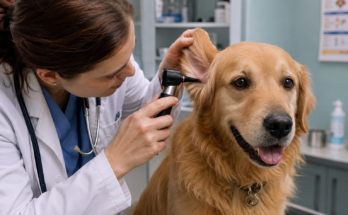
If your pet has a medical condition or follows a special diet, ask your veterinarian before introducing new treats.
Healthy Treats for Overweight Pets
If your dog or cat is overweight, treats need extra attention. Giving high calorie snacks throughout the day can make weight management more difficult.
For some pets, small pieces of low calorie vegetables may work as occasional treats, while others may do better with small portions of their regular food used as rewards.
The best approach depends on the individual pet. A veterinarian can help you create a suitable feeding and weight management plan.
Treats for Senior Dogs and Cats
Older pets may have different nutritional needs. Senior dogs may have dental problems that make hard treats difficult to chew. Senior cats may also prefer softer foods.
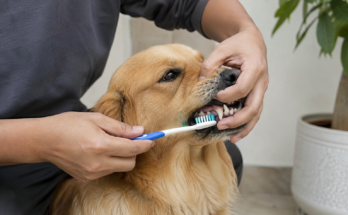
Soft treats or small pieces of appropriate cooked food may be easier for older pets. However, dental health is still important, so regular veterinary dental care should not be replaced with treats.
Always consider your senior pet’s overall health before changing its diet.
Final Thoughts
Healthy treats for dogs and cats can be a simple way to reward your pet while supporting a healthy lifestyle. The best treats are appropriate for the animal, made with simple ingredients, and given in moderation.
Dogs can enjoy options such as carrots, apples without seeds, blueberries, plain pumpkin, and plain cooked chicken. Cats generally benefit from protein based treats such as plain cooked chicken, turkey, and properly prepared fish.
Most importantly, treats should remain a small part of your pet’s overall diet. A complete and balanced pet food should provide the main nutrition your dog or cat needs.
By choosing healthy pet treats, checking ingredients, controlling portions, and avoiding unsafe foods, you can make treat time both enjoyable and responsible. Your pet may not understand the nutrition label, but they will certainly appreciate the love and attention that comes with every healthy reward.