Bringing a pet home is a wonderful experience, but it also comes with an important responsibility. One of the best things you can do for your pet is to keep vaccinations up to date. Pet vaccinations help protect dogs, cats, and other animals from serious diseases that can sometimes be dangerous or even life threatening.
If you are a new pet owner, vaccination schedules can feel confusing at first. You may wonder which vaccines your pet needs, when they should be given, and whether every pet follows the same schedule. This complete pet vaccination guide for beginners explains the basics in simple language so you can make better decisions about your pet’s health.
What Are Pet Vaccinations?
Pet vaccinations are specially prepared medicines that help the immune system recognize and fight certain diseases. A vaccine introduces the immune system to a harmless or weakened part of a disease causing organism. This allows the body to build protection without causing the actual disease in the usual way.
When your pet is later exposed to that disease, its immune system may respond more quickly and effectively. Vaccination does not guarantee that a pet will never become sick, but it can greatly reduce the risk of serious illness.
Vaccines are commonly used for dogs and cats, although vaccination needs can vary depending on the animal, age, lifestyle, location, and risk of exposure.
Why Are Pet Vaccinations Important?
Vaccinations are important because pets can be exposed to infectious diseases through other animals, contaminated environments, bodily fluids, or even objects that have come into contact with an infected animal.
Some diseases can spread quickly between animals. Certain infections can also affect humans, which makes responsible pet vaccination important for the whole family.
Keeping your pet vaccinated can also make travel, boarding, grooming, daycare, and visits to certain public places easier because proof of vaccination may be required.
Another important reason is prevention. Treating a serious infection can be expensive and stressful for both the pet and the owner. Vaccination is one of the basic steps you can take to reduce preventable health risks.
When Should Puppies and Kittens Get Vaccinated?
Young puppies and kittens usually begin their core vaccination series when they are several weeks old. The exact timing should be decided by a veterinarian because young animals receive some protection from antibodies passed from their mother, and this protection can affect when vaccines work best.
Puppies often receive a series of vaccinations over several weeks. Kittens also usually need multiple doses during their early months.
The reason for several doses is simple. A young animal’s immune system is still developing, and maternal antibodies may interfere with early vaccination. Repeated doses help provide reliable protection as the puppy or kitten grows.
Your veterinarian can create a vaccination schedule based on your pet’s age, health, lifestyle, and local disease risks.
Core Vaccines for Dogs
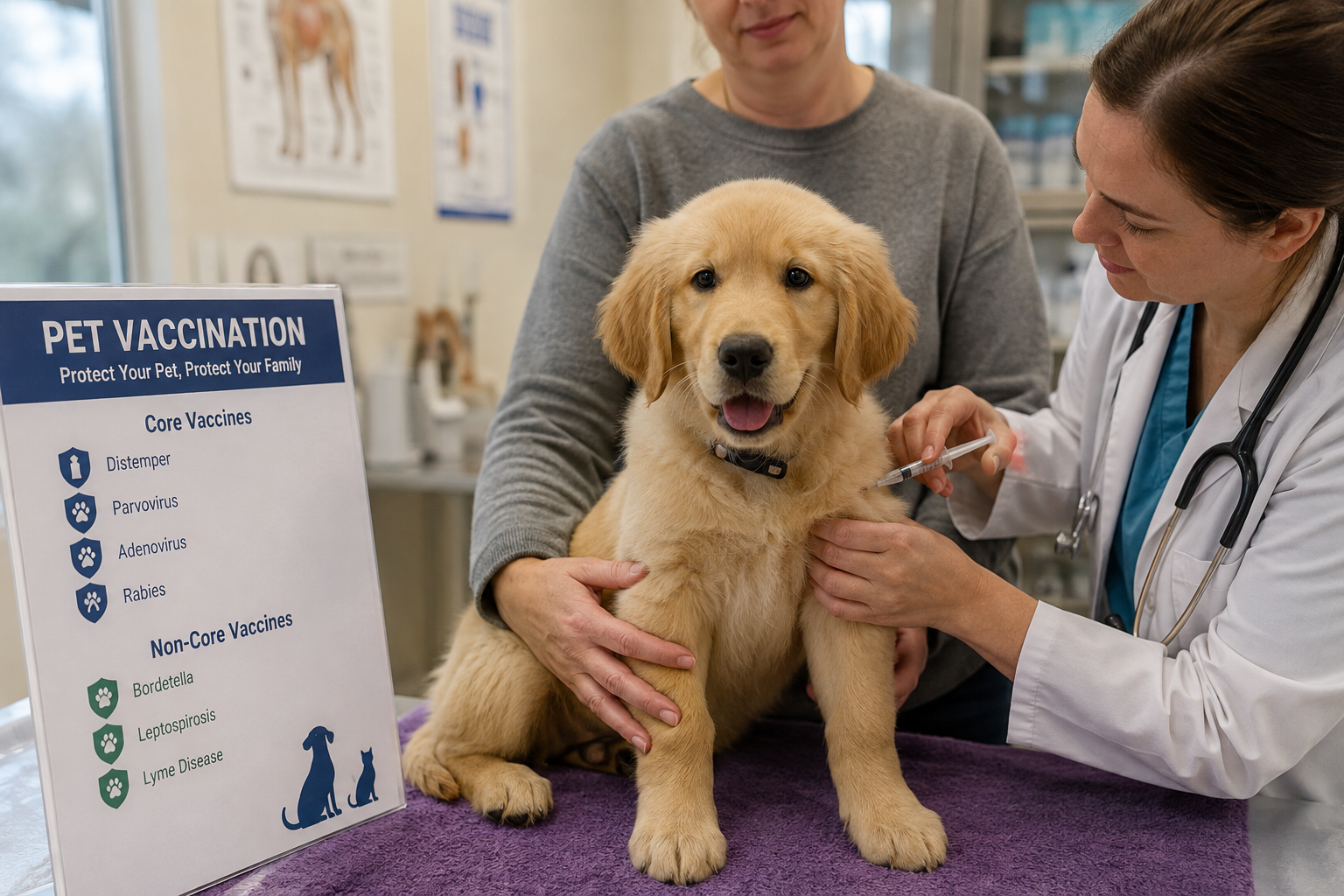
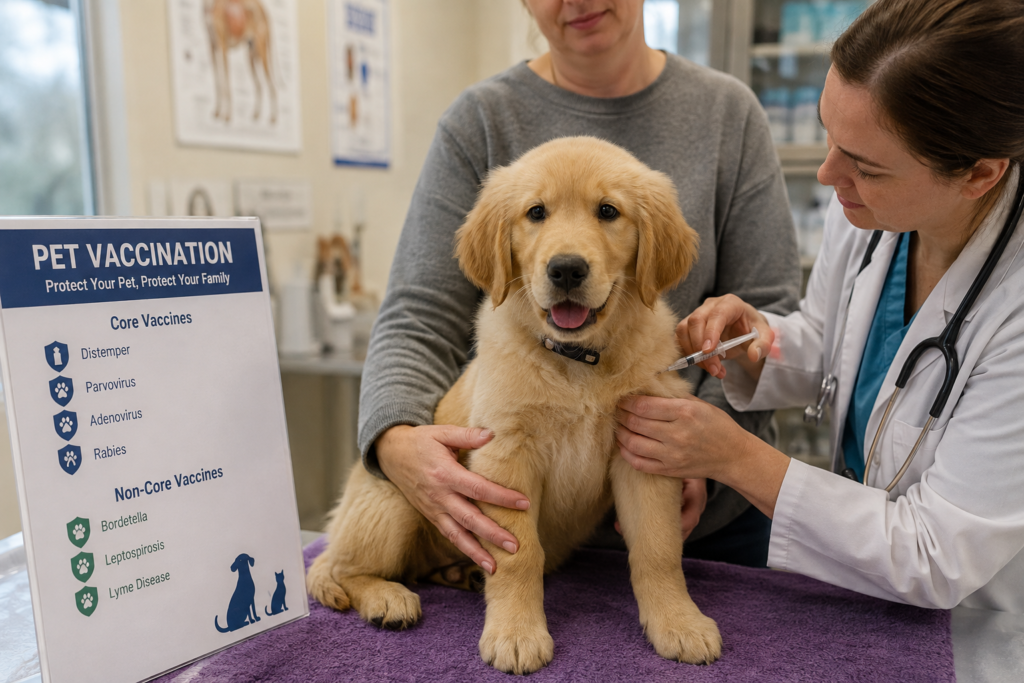
Core vaccines are vaccines generally considered important for most dogs because they protect against serious and widely distributed diseases.
Common core vaccines for dogs include protection against canine distemper, canine adenovirus, and canine parvovirus. Rabies vaccination is also extremely important and may be required by law in many areas.
Canine parvovirus can cause severe vomiting, diarrhea, dehydration, and other serious complications. Puppies are particularly vulnerable. Canine distemper can affect the respiratory, digestive, and nervous systems.
Your veterinarian may also recommend additional vaccines depending on where you live and how your dog spends its time.
For example, a dog that frequently visits parks, boarding facilities, training classes, or areas where other dogs gather may have different vaccination needs from a dog that spends most of its time at home.
Core Vaccines for Cats
Cats also need protection against several important diseases. Common core vaccines include protection against feline panleukopenia, feline herpesvirus, and feline calicivirus.
Rabies vaccination may also be recommended or legally required depending on your location.
Feline panleukopenia is a serious infectious disease that can be especially dangerous for kittens. Feline herpesvirus and calicivirus can cause respiratory and oral problems.
Even indoor cats may need vaccinations. Many owners assume an indoor cat has no exposure risk, but viruses and other infectious organisms can sometimes enter the home through people, clothing, shoes, other animals, or unexpected contact.
What Are Non Core Vaccines?
Not every pet needs every available vaccine. Non core vaccines are recommended based on individual risk.
A veterinarian may consider factors such as your pet’s lifestyle, travel plans, environment, age, and contact with other animals.
For dogs, vaccines against diseases such as Bordetella or leptospirosis may be recommended in certain situations. For cats, a feline leukemia virus vaccine may be appropriate for cats with a higher risk of exposure.
This is why it is better not to copy another pet’s vaccination schedule. Your pet’s needs may be different.
How Often Do Pets Need Vaccinations?
Vaccination schedules vary depending on the vaccine and the individual animal.
After the initial puppy or kitten vaccination series, pets may need booster vaccinations. Some vaccines are given annually, while others may be recommended at longer intervals.
Your veterinarian will tell you when your pet needs the next dose. Local regulations can also affect the schedule, especially for rabies vaccination.
Keeping a written or digital vaccination record is a simple way to avoid missing important appointments.
Are Pet Vaccinations Safe?
Most pets tolerate vaccines well. Like any medical treatment, however, vaccines can sometimes cause temporary side effects.
A pet may be slightly tired after vaccination or have mild soreness around the injection area. Some animals may eat a little less for a short period.
More serious reactions are uncommon but can happen. Signs of a potentially serious reaction may include difficulty breathing, severe weakness, facial swelling, repeated vomiting, or collapse.
If you notice unusual or severe symptoms after vaccination, contact your veterinarian promptly.
Your veterinarian can also explain what reactions are normal and what signs require immediate attention.
What Should You Do Before a Vaccination Appointment?
Before taking your pet for vaccination, make sure the veterinarian knows about your pet’s medical history. Bring previous vaccination records if you have them.
Tell the veterinarian about any recent illness, medications, allergies, unusual behavior, or changes in appetite.
It is also helpful to mention your pet’s lifestyle. Explain whether your pet spends time outdoors, visits dog parks, lives with other animals, travels, boards at facilities, or regularly meets unfamiliar animals.
These details can help your veterinarian choose an appropriate vaccination plan.
Can a Sick Pet Be Vaccinated?
Vaccination decisions should be made by a veterinarian. If your pet is currently sick, the veterinarian may recommend treating the illness first or adjusting the vaccination schedule.
This is one reason a proper veterinary examination is useful before vaccination. The veterinarian can assess your pet’s general condition and decide whether vaccination is appropriate at that time.
Never give your pet a vaccine or medication without appropriate veterinary guidance.
What Happens After Vaccination?
After vaccination, give your pet a comfortable place to rest. Some pets may be sleepy for a short time, which can be normal.
Keep an eye on your pet during the hours following the appointment. Watch for unusual symptoms and contact your veterinarian if something seems concerning.
Avoid putting unnecessary stress on your pet immediately after vaccination. Follow any specific instructions given by your veterinary clinic.
Remember that vaccines do not provide instant protection. Depending on the vaccine and your pet’s age, several doses may be needed before strong protection develops.
Keeping Your Pet’s Vaccination Records
Good record keeping is an important part of responsible pet ownership. Keep your pet’s vaccination certificates, dates, vaccine names, and veterinary information in one safe place.
You can keep a physical copy at home and a digital copy on your phone. This can be especially useful when traveling, moving to another area, boarding your pet, or visiting a new veterinarian.
If you adopt a pet and vaccination records are missing, tell the veterinarian. They can help determine the best way to move forward.
Common Pet Vaccination Mistakes to Avoid
One common mistake is assuming that pets only need vaccines when they are young. Adult pets can also need booster vaccinations and regular veterinary care.
Another mistake is skipping vaccinations because a pet lives indoors. Indoor living can reduce some risks, but it does not remove every possible source of exposure.
Pet owners should also avoid following vaccination schedules found online without discussing them with a veterinarian. Vaccination recommendations can differ based on location and individual risk.
Finally, do not ignore your pet’s vaccination records. Missing a scheduled booster can sometimes leave your pet less protected than expected.
Final Thoughts
Pet vaccination is one of the most important parts of maintaining your pet’s health. Vaccines help protect animals from serious infectious diseases and can also contribute to healthier communities for pets and people.
For beginners, the most important thing is to start with a veterinary visit and create a vaccination plan that fits your pet. Puppies and kittens generally need several vaccines during their early months, while adult pets may need booster doses according to their individual schedule.
Remember that every pet is different. Age, health, lifestyle, location, travel, and exposure to other animals can all affect vaccination needs.
By keeping vaccinations current, maintaining accurate records, and staying in regular contact with your veterinarian, you can give your pet a stronger foundation for a healthy and happy life.