Digestive problems are very common in dogs and cats. Almost every pet owner notices an upset stomach at some point. Your pet may suddenly stop eating, vomit, have loose stools, become constipated, or seem uncomfortable after eating. Sometimes these problems are mild and disappear within a short time. In other cases, digestive issues can be a sign of a more serious health problem that needs veterinary care.
Understanding the common digestive problems in dogs and cats can help you notice warning signs early. Good nutrition, fresh water, regular exercise, and proper veterinary care can also help keep your pet’s digestive system healthy. In this article, we will discuss common digestive problems, their possible causes, symptoms, and ways to support better digestive health in dogs and cats.
Vomiting
Vomiting is one of the most common digestive problems in dogs and cats. Pets may vomit because they ate their food too quickly, ate something they should not have eaten, or experienced a sudden change in diet. Some pets may also vomit because of infections, parasites, food allergies, or other medical conditions.
An occasional episode of vomiting may not always be serious if your pet otherwise looks healthy and returns to normal quickly. However, repeated vomiting should not be ignored. If your dog or cat vomits several times, cannot keep water down, appears weak, or has blood in the vomit, contact a veterinarian as soon as possible.
Diarrhea
Diarrhea is another common digestive problem in pets. It usually means that the stool is softer or more watery than normal. Dogs and cats can develop diarrhea after eating spoiled food, changing their diet too quickly, eating table scraps, or consuming something that does not agree with their stomach.
Stress can also cause temporary diarrhea in some pets. Parasites, bacterial infections, viral infections, food intolerance, and certain health conditions can cause longer lasting digestive problems.
If diarrhea continues for more than a short period, becomes severe, or is accompanied by vomiting, weakness, fever, dehydration, or blood in the stool, veterinary advice is important. Young puppies, kittens, older pets, and pets with existing health concerns may become dehydrated more quickly.
Constipation
Constipation happens when a pet has difficulty passing stool or produces very hard and dry stool. Cats can be especially prone to constipation, particularly those that do not drink enough water or have a low activity level.
Dogs may also become constipated after eating large amounts of bones, hair, grass, or other materials that are difficult to digest. Lack of exercise and dehydration can also contribute to constipation.
Signs of constipation may include repeated attempts to pass stool, small hard stools, discomfort, reduced appetite, or spending more time than usual in the litter box in cats. If your pet repeatedly struggles to defecate, a veterinarian should check the problem because an obstruction or another medical condition may be involved.
Gas and Bloating
Gas is a normal part of digestion, but excessive gas can become uncomfortable for pets and their owners. Dogs that eat too quickly may swallow a large amount of air, which can increase gas. Certain foods may also cause digestive discomfort.
Some dog breeds are more likely to have gas because of their body shape and eating habits. Cats can also experience gas, although frequent or strong smelling gas may suggest that something is wrong with their digestive system.
Bloating is more concerning than ordinary gas. A swollen abdomen, restlessness, repeated attempts to vomit without producing anything, excessive drooling, or sudden weakness can be emergency signs, especially in dogs. If these symptoms appear suddenly, seek veterinary care immediately.
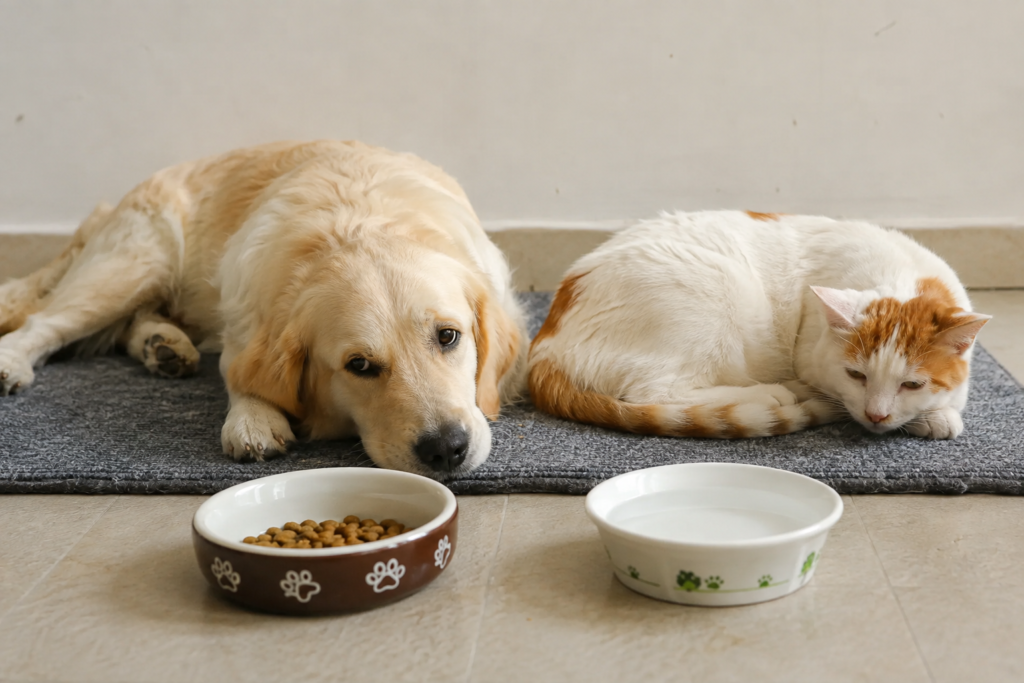
Loss of Appetite
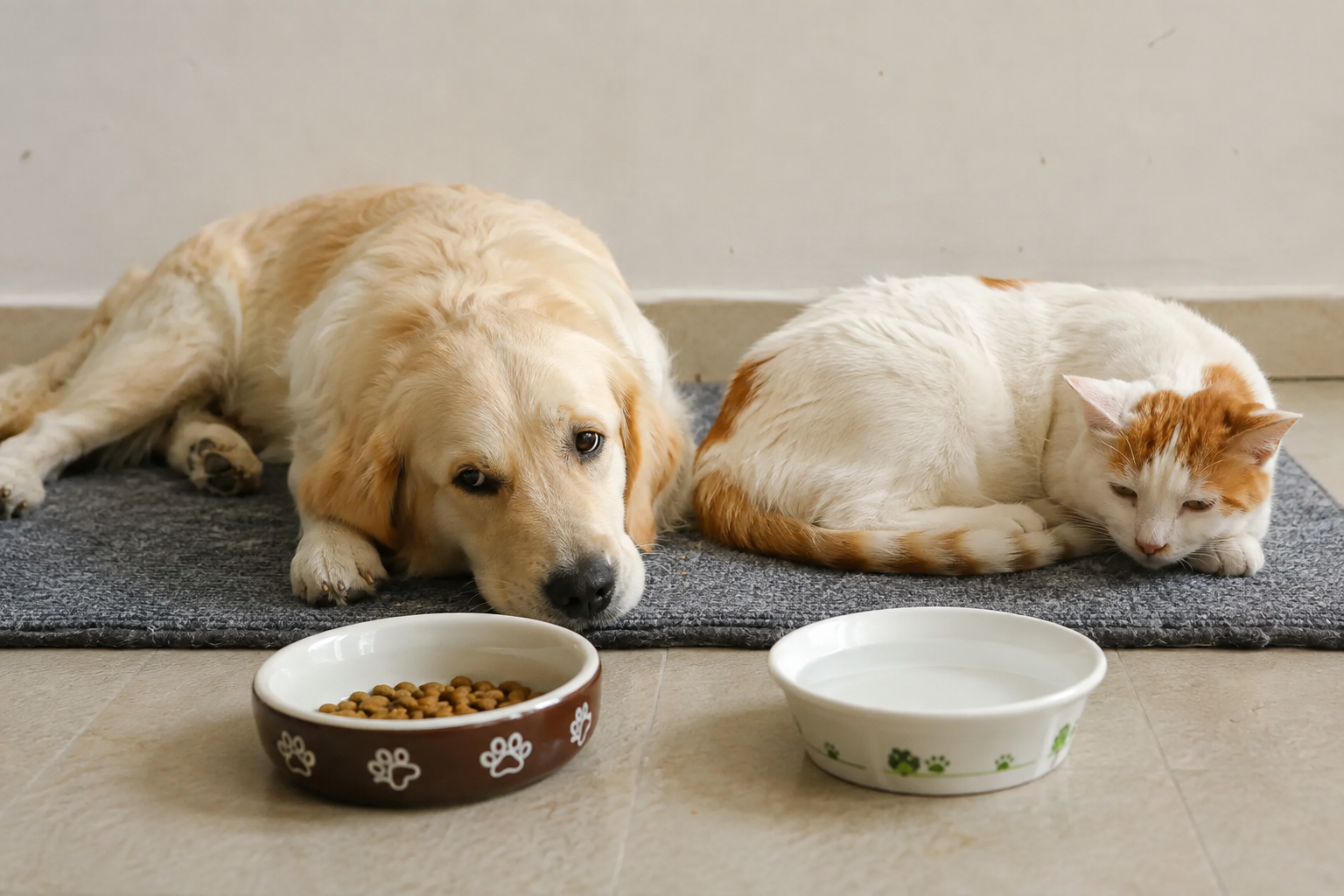
A healthy dog or cat usually has a fairly regular eating pattern. A sudden loss of appetite can therefore be an important sign of digestive trouble or another health problem.
Pets may refuse food because they feel nauseous, have stomach pain, have dental discomfort, or have eaten something that upset their digestive system. Stress and changes in the home environment can also affect appetite.
If your pet refuses food for an extended period, becomes weak, vomits, or shows other unusual symptoms, speak with a veterinarian. Cats in particular should not be allowed to go without food for too long because prolonged lack of eating can lead to serious health problems.
Food Allergies and Food Intolerance
Food allergies and food intolerance can cause several digestive symptoms in dogs and cats. Some pets may react badly to certain ingredients found in their food. Common signs can include diarrhea, vomiting, excessive gas, poor appetite, or changes in stool.
Food allergies may also cause skin problems, itching, ear irritation, or repeated licking and scratching. However, digestive symptoms alone do not prove that a pet has a food allergy.
If you suspect that your pet has a food related problem, talk to your veterinarian before making major dietary changes. A veterinarian may recommend a carefully controlled diet to help identify the ingredient causing the problem.
Intestinal Parasites
Parasites are a common cause of digestive problems in dogs and cats. Roundworms, hookworms, tapeworms, and other intestinal parasites can affect pets of different ages.
Symptoms may include diarrhea, vomiting, weight loss, poor growth, a swollen abdomen, changes in appetite, or visible worms in the stool. Some pets may have parasites without showing obvious symptoms.
Regular veterinary checkups and parasite prevention can help protect your pet. Puppies and kittens are especially important to monitor because parasites can affect their growth and overall health.
Gastroenteritis
Gastroenteritis means inflammation of the stomach and intestines. It can be caused by infections, spoiled food, dietary changes, parasites, or eating something inappropriate.
A pet with gastroenteritis may experience vomiting, diarrhea, loss of appetite, abdominal discomfort, and tiredness. Some cases are mild, while others can cause significant dehydration.
Treatment depends on the underlying cause. Your veterinarian may recommend changes in food, fluids, medication, or additional testing. Avoid giving human medicines to your pet unless a veterinarian specifically recommends them.
Hairballs in Cats
Hairballs are a familiar problem for many cat owners. Cats naturally swallow loose hair while grooming themselves. Most of the hair passes through the digestive system and leaves the body in the stool. Sometimes hair collects in the stomach and forms a hairball.
Occasional hairballs can happen, especially in cats with long coats. However, frequent vomiting, repeated gagging, constipation, or a sudden change in grooming behavior should be checked by a veterinarian.
Regular brushing can help reduce the amount of loose hair your cat swallows. A balanced diet and proper hydration can also support normal digestion.
Pancreatitis
Pancreatitis occurs when the pancreas becomes inflamed. It can affect both dogs and cats. The condition may cause vomiting, abdominal pain, poor appetite, diarrhea, weakness, and dehydration.
Some cases can become serious and require veterinary treatment. Because the symptoms of pancreatitis can look similar to other digestive problems, a veterinarian may need to perform an examination and diagnostic tests.
Never assume that repeated vomiting or severe stomach pain is simply an upset stomach. Early veterinary attention can make an important difference.
Inflammatory Bowel Disease
Inflammatory bowel disease, often called IBD, involves ongoing inflammation in the digestive tract. It can affect both dogs and cats and may cause long term digestive symptoms.
Common signs include recurring vomiting, chronic diarrhea, weight loss, changes in appetite, and poor body condition. Some pets may improve temporarily and then develop symptoms again.
Diagnosis may require blood tests, stool tests, imaging, dietary trials, or other veterinary procedures. Treatment is usually based on the individual pet and may involve a special diet and medication.
How to Support Healthy Digestion in Dogs and Cats
Good digestive health starts with a suitable diet. Choose a complete and balanced pet food that matches your pet’s age, size, lifestyle, and nutritional needs. Avoid sudden changes in food because a rapid diet change can upset the stomach.
When changing your pet’s food, gradually mix the new food with the old food over several days. Always provide clean, fresh water and make sure your pet has regular opportunities to exercise.
Avoid giving pets large amounts of table scraps or foods that are unsafe for animals. Keep garbage, medications, chemicals, and other harmful substances out of their reach.
Regular grooming is also helpful, especially for cats that groom themselves frequently. Brushing can reduce the amount of loose hair they swallow.
Regular veterinary examinations are another important part of digestive health. Your veterinarian can check your pet’s weight, appetite, stool history, parasite prevention, and general health.
When to Contact a Veterinarian
Not every digestive problem is an emergency, but certain symptoms should never be ignored. Contact a veterinarian if your pet has repeated vomiting, severe or persistent diarrhea, blood in the vomit or stool, severe abdominal pain, extreme tiredness, dehydration, difficulty passing stool, a swollen abdomen, or a sudden refusal to eat.
You should also seek veterinary help if your pet’s digestive problems keep coming back. Repeated symptoms may indicate an underlying condition that needs proper diagnosis.
Final Thoughts
Common digestive problems in dogs and cats include vomiting, diarrhea, constipation, gas, bloating, food intolerance, parasites, gastroenteritis, hairballs, pancreatitis, and inflammatory bowel disease. Some problems are temporary, but others can become serious without proper treatment.
The best way to protect your pet’s digestive health is to provide a balanced diet, fresh water, regular exercise, parasite prevention, proper grooming, and routine veterinary care. Pay attention to changes in your pet’s eating habits, stool, energy level, and behavior.
Knowing what is normal for your dog or cat makes it easier to notice when something has changed. If you are ever unsure about your pet’s digestive symptoms, it is safer to ask a veterinarian rather than waiting for the problem to become worse. Early attention can help your pet get the right care and return to a comfortable and healthy life.