
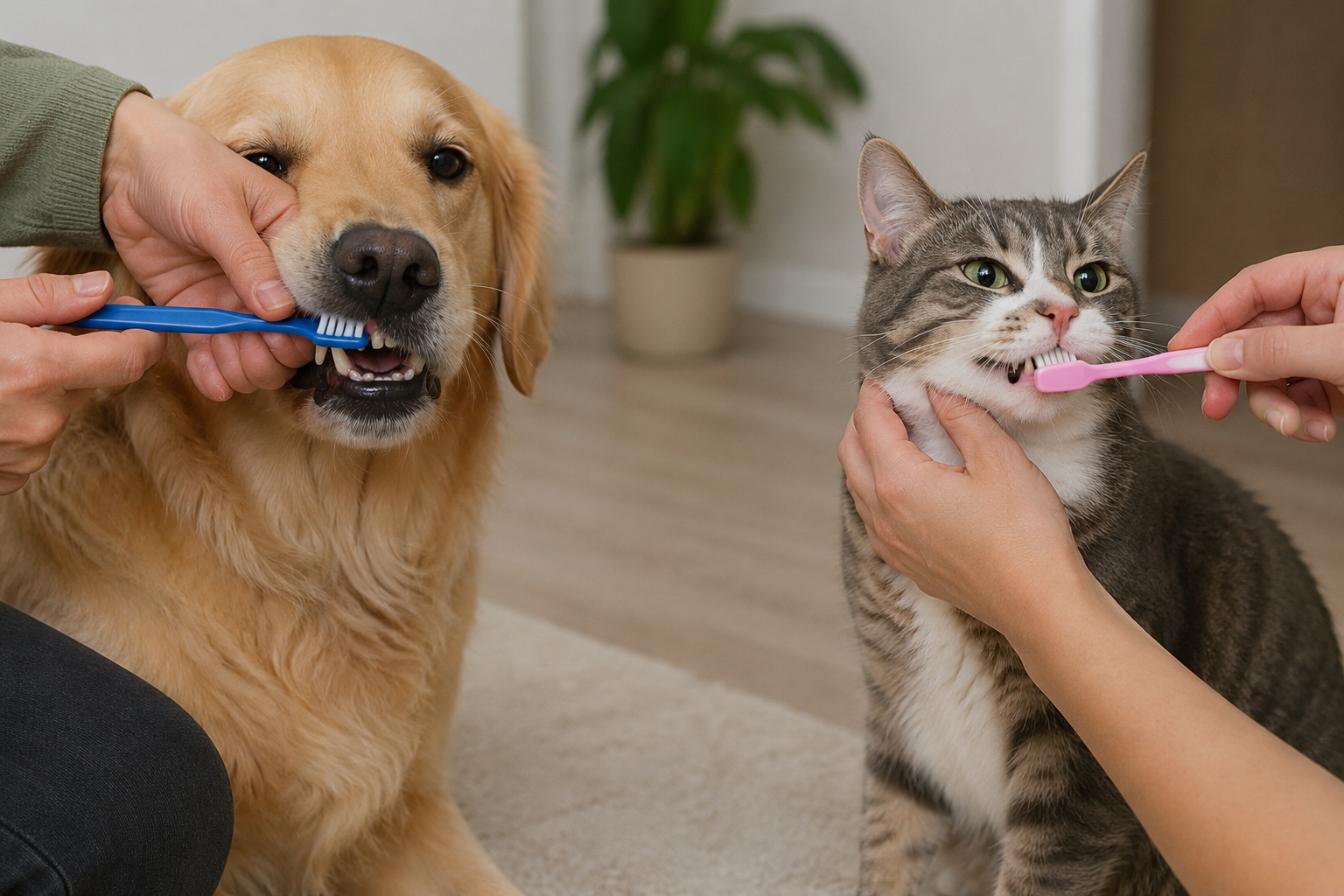
Dental care is an important part of keeping your dog or cat healthy and comfortable. Many pet owners focus on food, exercise, vaccinations, and grooming but forget about their pet’s teeth. Just like people, pets can develop plaque, tartar, gum disease, tooth decay, and other dental problems. If these problems are ignored, they can cause pain and may even affect a pet’s overall health.
A good dental care routine can help protect your pet’s teeth and gums for many years. Regular brushing, healthy dental products, proper food, and veterinary checkups can make a big difference. This complete dental care guide for dogs and cats explains simple ways to keep your pet’s mouth clean and healthy.
Why Dental Care Is Important for Pets
Dogs and cats use their teeth every day to eat, play, and explore their surroundings. Over time, food particles and bacteria can build up on the teeth. This creates a sticky layer called plaque. If plaque is not removed, it can become hard tartar.
Tartar can irritate the gums and lead to gum disease. In serious cases, infection can develop around the teeth. A pet may experience pain, difficulty eating, bad breath, or loose teeth. Dental disease can also allow harmful bacteria to enter the bloodstream.
Good pet dental care helps prevent these problems. Taking a few minutes to care for your pet’s teeth regularly can support better oral health and improve their quality of life.
Common Dental Problems in Dogs and Cats
Dogs and cats can develop several types of dental problems. One of the most common signs is bad breath. While many owners think bad breath is normal for pets, strong or unpleasant breath can be a sign of dental disease.
Plaque and tartar are also common problems. When tartar builds up around the gum line, it can cause redness and irritation. This may develop into gingivitis, which is inflammation of the gums.
Another common issue is periodontal disease. This condition affects the tissues that support the teeth. It can become painful and may eventually cause tooth loss.
Pets can also suffer from broken teeth, infected teeth, and oral injuries. Cats may develop painful dental conditions that make eating uncomfortable. Regular dental checks can help identify these problems early.
Signs Your Pet May Have Dental Problems
It is important to watch your dog or cat for changes in their mouth and eating habits. Some dental problems are easy to see, while others may require a veterinary examination.
Common signs of dental disease include bad breath, yellow or brown teeth, red gums, swollen gums, bleeding from the mouth, loose teeth, and difficulty chewing. Some pets may drop food while eating or suddenly prefer soft food.
You may also notice your pet rubbing their face or mouth with their paws. Some animals become less interested in food because chewing is painful. If your pet shows any unusual changes, it is a good idea to speak with a veterinarian.
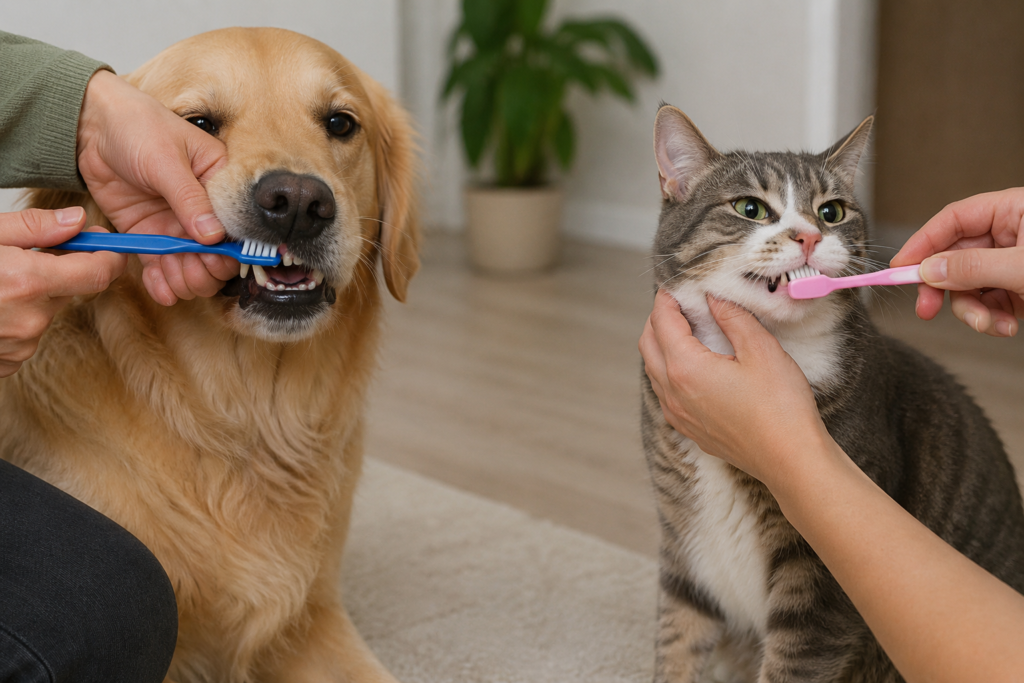
How to Brush Your Dog’s Teeth
Brushing your dog’s teeth is one of the best ways to support good dental health. However, dogs may need some time to become comfortable with the process.
Start by allowing your dog to become familiar with your finger and a pet toothbrush. Gently touch their mouth and teeth without forcing them. Give praise and a small reward so your dog connects dental care with a positive experience.
Once your dog is comfortable, use a toothbrush designed for pets and toothpaste made specifically for dogs. Gently brush the outside surfaces of the teeth, especially near the gum line. You do not need to brush aggressively.
Try to make tooth brushing a regular part of your dog’s routine. Daily brushing is ideal, but regular brushing can still provide important benefits.
How to Brush Your Cat’s Teeth
Cats can also benefit from regular tooth brushing, although many cats need more patience during the process. Begin slowly and allow your cat to become comfortable with having their mouth touched.
Use a small pet toothbrush and toothpaste made for cats. Never use regular human toothpaste because some ingredients can be unsafe for pets.
Start by gently brushing a few teeth for a short time. As your cat becomes more comfortable, gradually increase the amount of time. Stay calm and gentle throughout the process.
If your cat becomes very stressed, stop and try again later. The goal is to create a comfortable routine rather than forcing the process.
Never Use Human Toothpaste
One important rule of pet dental care is to avoid human toothpaste. Human toothpaste is made for people and may contain ingredients that are not safe for dogs or cats.
Some products can contain xylitol, an ingredient that can be dangerous for dogs. Pets also do not rinse and spit toothpaste out like people do. They may swallow it instead.
Always choose toothpaste that is specifically designed for pets. Pet toothpaste is available in different flavors and can make brushing easier for some animals.
Dental Treats and Chew Toys
Dental treats can be useful as part of a complete pet dental care routine. Some dental treats are designed to help reduce plaque and support cleaner teeth. However, they should not completely replace brushing.
Chew toys may also help maintain dental health, especially for dogs. Choose products that are appropriate for your dog’s size and chewing habits. Avoid extremely hard objects that could damage or break the teeth.
Cats may also benefit from dental products designed specifically for feline use. Always follow product instructions and supervise your pet when introducing a new chew or dental product.
Food and Dental Health
Your pet’s diet can also play a role in dental health. A balanced diet supports healthy teeth, gums, bones, and overall body function.
Some specially designed dental foods may help reduce plaque buildup because of their texture. However, food alone cannot replace proper dental care.
Fresh drinking water should always be available. Keeping your pet hydrated supports general health and helps maintain normal mouth function.
If you are unsure about the best food for your dog or cat, ask your veterinarian for advice based on your pet’s age, size, activity level, and individual needs.
Professional Pet Dental Cleaning
Home dental care is important, but professional veterinary dental care is also necessary. A veterinarian can examine your pet’s teeth and gums and look for problems that may not be visible during a normal home check.
Professional dental cleaning can remove hardened tartar that cannot be removed with regular brushing. Depending on your pet’s condition, the veterinarian may also recommend dental X rays or treatment for damaged or infected teeth.
Your veterinarian can tell you how often your pet needs professional dental care. The right schedule depends on factors such as age, breed, dental history, and overall health.
Dental Care for Puppies and Kittens
It is a good idea to introduce dental care when your pet is young. Puppies and kittens can learn that mouth handling and tooth brushing are normal parts of daily care.
Start gently and keep early sessions short. You can reward your young pet for staying calm. This can make future dental care much easier.
Young pets should also receive regular veterinary examinations. Your veterinarian can monitor the development of their teeth and identify problems as they grow.
How Often Should You Check Your Pet’s Teeth?
Try to look at your pet’s mouth regularly. You do not need to perform a complicated examination. Simply check for changes in the teeth, gums, and breath.
Look for plaque, tartar, red gums, swelling, bleeding, broken teeth, or unusual odors. If you notice something that does not look normal, contact your veterinarian.
Regular checks are helpful because dental problems can become more serious when they are ignored for a long time.
When to Visit a Veterinarian
Some dental problems need professional attention. Contact your veterinarian if your pet has severe bad breath, bleeding gums, facial swelling, loose teeth, difficulty eating, excessive drooling, or signs of mouth pain.
You should also seek veterinary advice if your pet suddenly stops eating or changes the way they chew. These changes can sometimes indicate a painful dental condition.
Do not try to remove serious tartar or treat an infected tooth at home. A veterinarian can safely examine your pet and recommend the right treatment.
Simple Daily Dental Care Routine
A simple routine can make pet dental care easier. Start by checking your pet’s mouth regularly. Brush their teeth with pet safe toothpaste when possible. Provide suitable dental treats or toys if recommended. Make sure your pet eats a balanced diet and has fresh water every day.
Most importantly, schedule regular veterinary checkups. Consistency is more important than doing everything perfectly.
Final Thoughts
Complete dental care for dogs and cats is an important part of responsible pet ownership. Healthy teeth and gums can help your pet eat comfortably, avoid painful dental problems, and enjoy a better quality of life.
Start dental care early and introduce new routines slowly. Regular brushing, suitable dental products, healthy food, and professional veterinary care can help protect your pet’s oral health.
If you notice bad breath, red gums, tartar, bleeding, loose teeth, or changes in eating habits, do not ignore them. Early attention can prevent small dental problems from becoming serious. With regular care and a little patience, you can help your dog or cat maintain healthy teeth and a happy smile for years to come.
comfortable life.