Pets are an important part of our families, and when something suddenly goes wrong, it can be difficult to know what to do. A pet may become sick or injured without warning, and sometimes a condition that looks small can become serious very quickly. Knowing the signs of a pet emergency can help you stay calm and make the right decision when your dog or cat needs help.
Some health problems can be safely watched at home, while others require immediate veterinary care. In an emergency, waiting too long can make the condition worse and may even put your pet’s life at risk. This pet emergency guide explains the most common warning signs, what you should do during an emergency, and when you should contact a veterinarian.
What Is a Pet Emergency?
A pet emergency is any situation where your pet’s health could become seriously worse without quick medical attention. Emergencies can happen because of an accident, poisoning, sudden illness, breathing problems, severe pain, or another serious condition.
Dogs and cats cannot tell us exactly what they are feeling. They may hide pain or act normally until a problem becomes severe. This is why pet owners should pay attention to sudden changes in behavior, breathing, movement, appetite, and energy levels.
If you feel that something is seriously wrong with your pet, it is better to contact a veterinarian and ask for advice rather than waiting and hoping the problem improves.
Difficulty Breathing
Breathing problems are one of the most serious signs that your pet needs immediate veterinary care. A healthy dog or cat should be able to breathe comfortably without excessive effort.
Warning signs include very fast breathing, struggling to breathe, noisy breathing, open mouth breathing in cats, blue or pale gums, stretching the neck to breathe, or suddenly becoming weak.
If your pet is having trouble breathing, keep them calm and avoid unnecessary movement. Do not force food or water. Contact an emergency veterinarian immediately and follow their instructions while traveling to the clinic.
Breathing problems can be caused by choking, heart disease, lung problems, allergic reactions, infections, or injuries. Because some causes can become life threatening quickly, emergency veterinary care is important.
Severe Bleeding
Small cuts may sometimes be treated with basic first aid, but heavy or uncontrolled bleeding is a veterinary emergency. Severe blood loss can cause weakness, shock, and even death.
If your pet has a serious wound, use a clean cloth or gauze to apply gentle but firm pressure to the area. Do not keep removing the cloth to check the wound because this can disturb blood clots.
If blood continues to soak through the cloth, place another clean cloth on top and continue applying pressure. Take your pet to a veterinarian as soon as possible.
Never use household chemicals or random medicines on a serious wound unless a veterinarian tells you to do so.
Suspected Poisoning
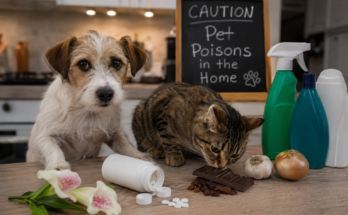
Pet poisoning is another common emergency. Dogs and cats may accidentally eat medications, cleaning products, chemicals, certain foods, plants, or other dangerous substances.
Common signs of poisoning may include vomiting, diarrhea, excessive drooling, shaking, weakness, confusion, seizures, difficulty breathing, or sudden changes in behavior.
If you think your pet has eaten something poisonous, contact a veterinarian immediately. Keep the package or container of the suspected substance if possible. This can help the veterinarian understand what your pet may have swallowed.
Do not make your pet vomit unless a veterinary professional specifically tells you to do so. Some substances can cause more damage when they come back up.
Repeated Vomiting or Diarrhea
Vomiting and diarrhea can happen for many reasons, and one mild episode may not always be an emergency. However, repeated vomiting or severe diarrhea can quickly lead to dehydration and weakness.
You should be especially concerned if there is blood in the vomit or stool, your pet becomes very weak, refuses water, has a swollen abdomen, or continues vomiting repeatedly.
Young puppies, kittens, older pets, and pets with existing health problems can become dehydrated more quickly. If symptoms are severe or continue, contact your veterinarian promptly.
Seizures
Seeing your pet have a seizure can be frightening. During a seizure, your pet may fall over, become stiff, paddle their legs, drool, or lose control of their bladder or bowels.
Try to stay calm. Move furniture or objects away from your pet so they do not hurt themselves. Do not put your fingers or anything else inside their mouth.
If the seizure lasts several minutes, happens repeatedly, or this is the first seizure your pet has ever experienced, seek immediate veterinary care. A veterinarian can determine the possible cause and provide appropriate treatment.
Severe or Sudden Pain
Pets often hide pain, so sudden signs of severe discomfort should always be taken seriously. A pet in serious pain may cry, growl, hide, refuse to move, breathe rapidly, shake, or repeatedly change position because they cannot get comfortable.
Sudden severe pain can result from an injury, internal problem, urinary blockage, digestive emergency, or another serious condition.
Do not give human pain medication unless your veterinarian specifically recommends it. Some common human medicines can be extremely dangerous for dogs and cats.
Swollen or Painful Abdomen
A suddenly swollen abdomen can be a serious warning sign, especially in dogs. If your pet’s stomach becomes enlarged, hard, or painful and they are trying to vomit without producing anything, seek emergency veterinary care.
Other warning signs may include restlessness, excessive drooling, weakness, rapid breathing, and collapse.
A swollen abdomen can sometimes indicate a serious digestive emergency that requires immediate treatment. Do not wait for the condition to improve on its own.
Collapse or Extreme Weakness
If your pet suddenly collapses, cannot stand, or becomes extremely weak, treat the situation as an emergency.
Collapse can happen because of heart problems, blood loss, poisoning, heatstroke, severe infection, low blood sugar, or other serious conditions.
Keep your pet warm and comfortable unless they are overheated. Avoid giving food or water if they are unconscious, confused, or unable to swallow normally. Contact a veterinarian immediately.
Serious Injuries and Accidents
Car accidents, falls, animal fights, and other injuries can cause damage that is not always visible from the outside. A pet may appear okay after an accident but still have internal injuries.
After a serious accident, watch for difficulty breathing, bleeding, weakness, limping, pale gums, unusual behavior, or loss of consciousness.
Handle an injured pet carefully because pain and fear may cause even a normally friendly animal to bite. If possible, use a carrier, box, blanket, or other safe method to transport them.
Even if your pet appears normal after a major accident, veterinary evaluation may still be necessary.
Heatstroke
Heatstroke can become life threatening very quickly. Dogs are especially vulnerable during hot weather, but cats can also suffer from dangerous overheating.
Signs may include heavy panting, excessive drooling, weakness, vomiting, confusion, difficulty walking, collapse, or seizures.
Move your pet to a cool area immediately and contact a veterinarian. You can use cool or room temperature water to help lower their body temperature, but avoid using extremely cold water.
Never leave a pet inside a parked vehicle, even for a short time. Temperatures inside cars can rise dangerously fast.
Difficulty Urinating
Difficulty urinating can be an emergency, particularly in male cats. A pet that repeatedly tries to urinate but produces little or no urine may have a urinary blockage.
Other signs include crying while trying to urinate, licking the genital area, restlessness, vomiting, weakness, and loss of appetite.
A urinary blockage can become life threatening and requires immediate veterinary treatment. If your pet cannot urinate normally, do not wait until the next day to seek help.
Eye Injuries
Eye problems should be taken seriously because damage to the eye can sometimes progress quickly. Contact a veterinarian immediately if your pet has suffered an eye injury, has a suddenly swollen eye, cannot open the eye, has severe redness, or appears to have lost vision.
Do not allow your pet to rub or scratch the affected eye. If you have a protective collar available, it may help prevent further injury while you travel to the clinic.
What to Do During a Pet Emergency
The most important thing during a pet emergency is to stay calm. Your pet may become frightened, and your calm behavior can help reduce their stress.
First, move your pet away from immediate danger if it is safe to do so. Then contact your veterinarian or a nearby emergency veterinary clinic. Explain the symptoms clearly and follow their instructions.
If your pet has been injured, transport them carefully. A carrier is useful for cats and small dogs. A blanket can sometimes help move a larger injured pet while keeping movement to a minimum.
Bring important information with you, including your pet’s medications, medical history, and any packaging from a substance they may have eaten.
Keep a Pet Emergency Kit at Home
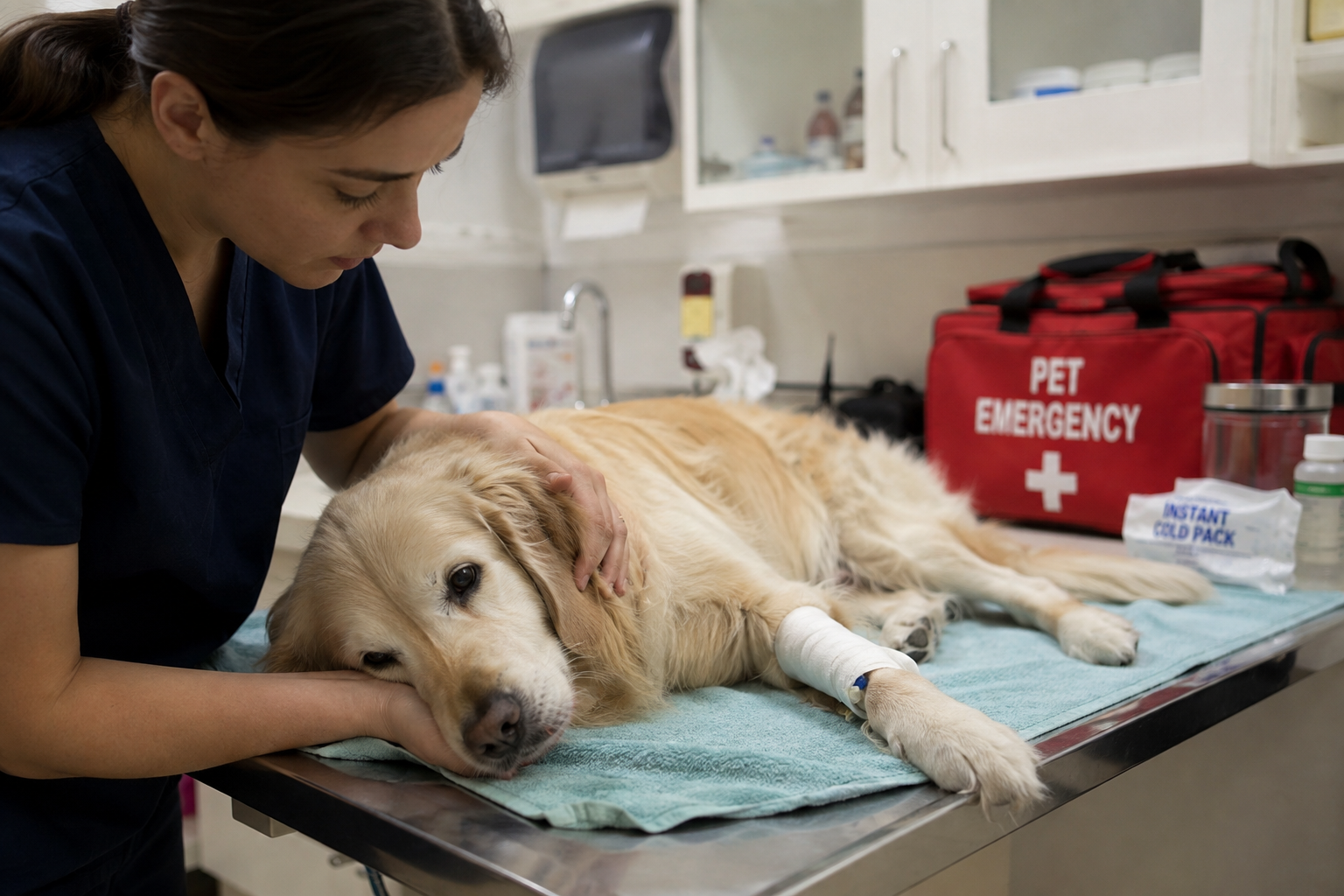
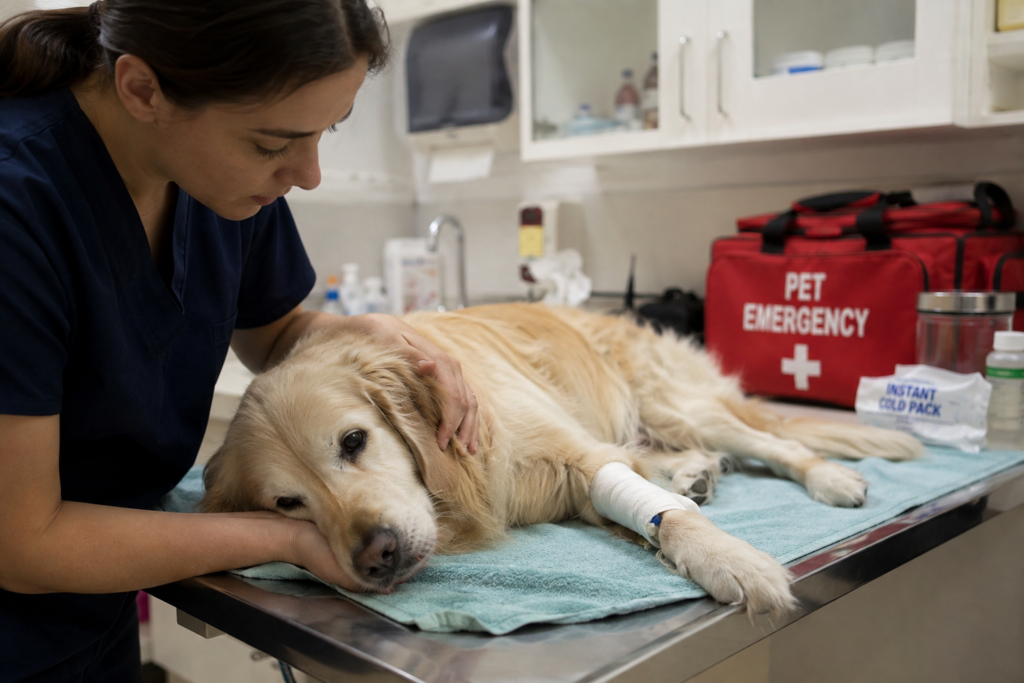
Every pet owner should consider keeping a basic pet first aid kit at home. Useful items may include clean gauze, bandages, a digital thermometer, disposable gloves, clean towels, a flashlight, and your veterinarian’s contact information.
A first aid kit is not a replacement for veterinary treatment, but it can help you manage a situation until professional care is available.
It is also helpful to know where your nearest emergency veterinary clinic is located before an emergency happens. Save the phone number in your phone so you do not have to search for it while your pet is seriously ill or injured.
When in Doubt, Contact Your Veterinarian
It is not always easy to decide whether a pet problem is an emergency. If you are unsure, contacting a veterinarian is usually the safest choice.
Pay attention to sudden changes in your pet’s behavior, breathing, movement, appetite, and bathroom habits. You know your pet better than anyone, so if something feels seriously different, do not ignore it.
Early veterinary care can make a major difference in many emergency situations. Getting help quickly can reduce complications, improve treatment options, and give your pet a better chance of recovery.
Final Thoughts
Knowing when to seek immediate veterinary care is an important part of responsible pet ownership. Breathing difficulty, severe bleeding, poisoning, seizures, collapse, severe pain, heatstroke, serious injuries, urinary problems, and sudden abdominal swelling should never be ignored.
A pet emergency can be stressful, but preparation can help you respond more effectively. Keep basic first aid supplies available, know how to contact your veterinarian, and learn the warning signs that require urgent attention.
When your pet’s health is involved, it is always better to ask for professional advice than to wait too long. Quick action, careful observation, and timely veterinary care can make a real difference when your dog or cat needs help the most.